
Medications
Support follow-through, capture medication questions and barriers, and identify changes that may require attention.

The gap
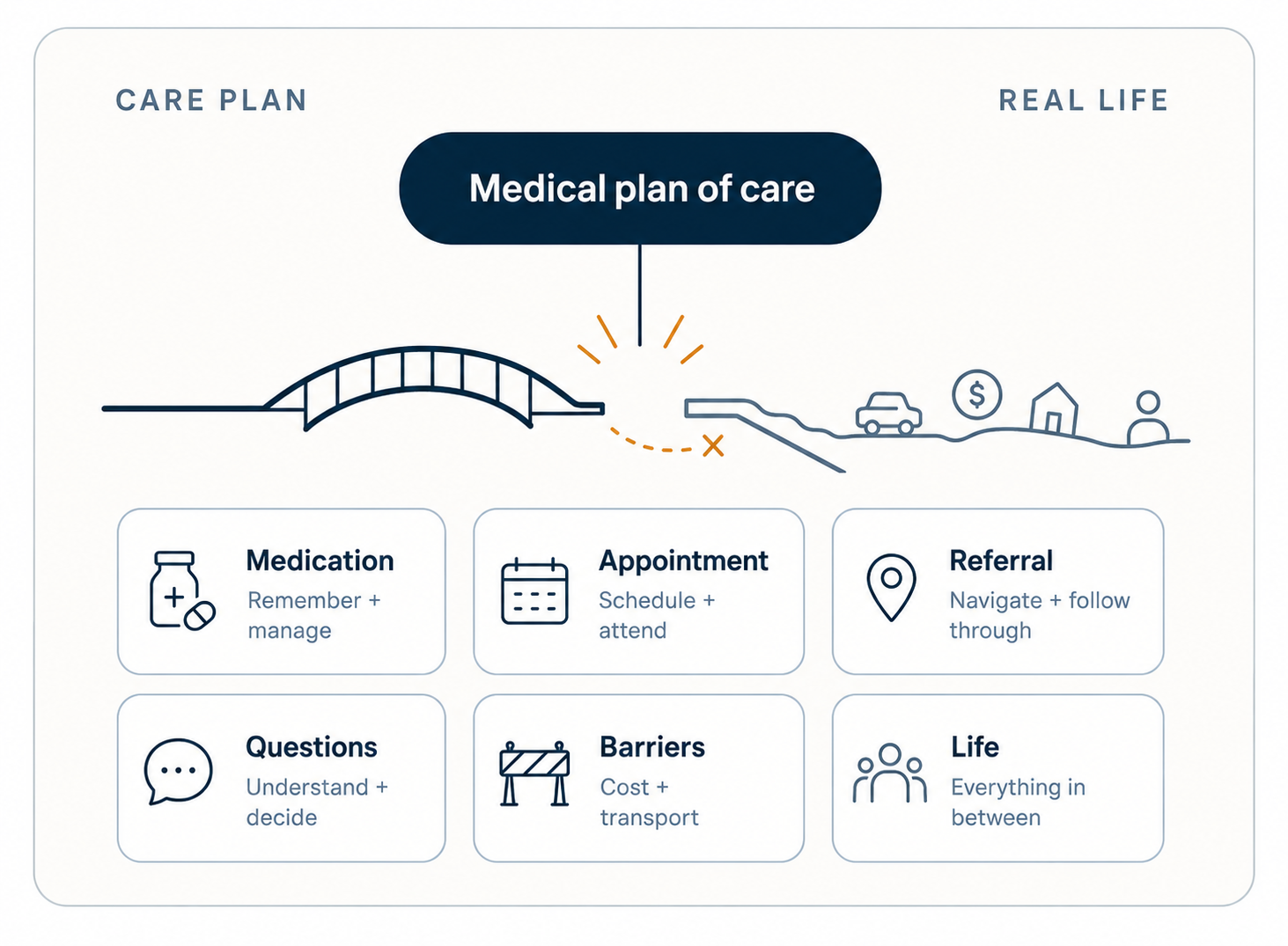
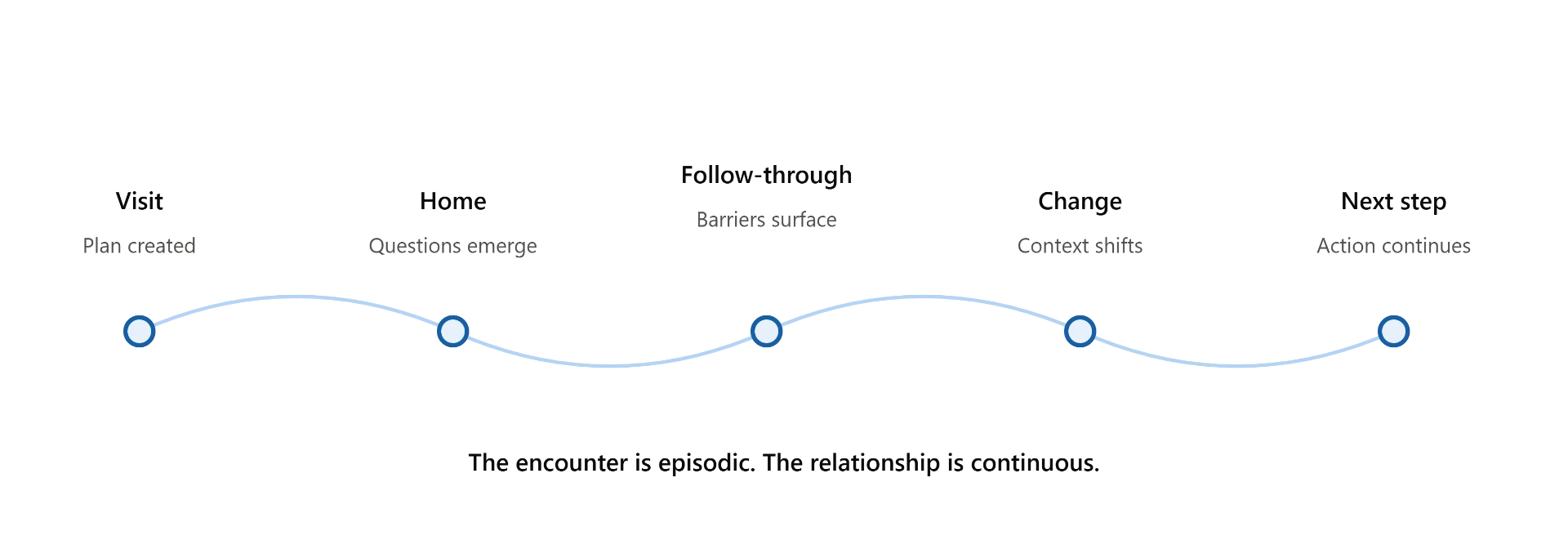
A doctor’s appointment may last 20 minutes. The decisions that determine what happens next unfold over days, weeks, and months.
Traditional healthcare systems weren’t designed to support and monitor a patient’s progress between visits.
That is the gap Hygia was created to fill.
Introducing Hygia
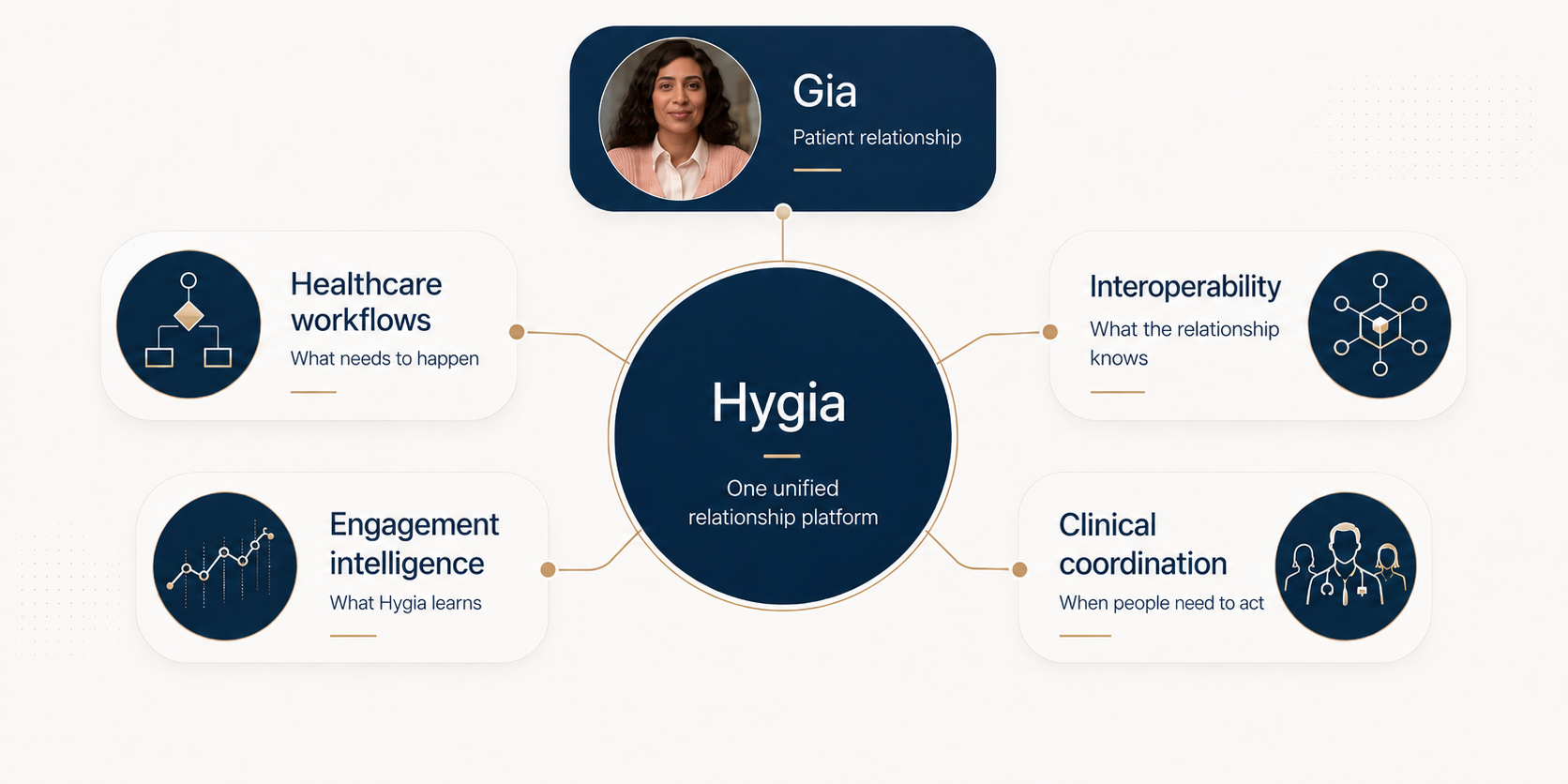
Hygia combines conversational artificial intelligence, healthcare-specific workflows, interoperability infrastructure, engagement intelligence, and clinical coordination capabilities in one relationship platform.
At the center is Gia, Hygia’s AI-powered digital health companion. Gia maintains natural, personalized interactions with patients while Hygia connects those conversations to the workflows, intelligence, data, and people responsible for care.
Meet Gia
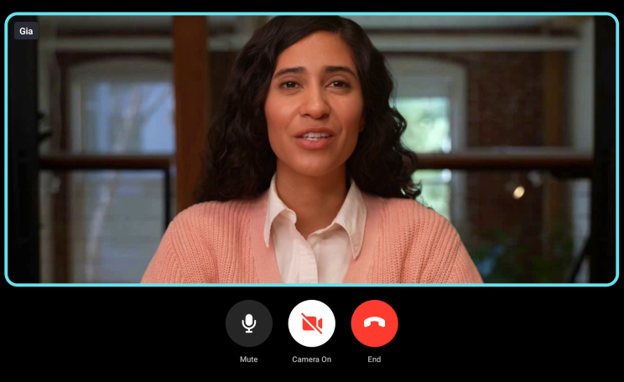
Gia is the patient-facing expression of Hygia. She gives patients a natural way to engage with the healthcare organizations responsible for their care through conversational voice and video interactions.
Unlike a traditional chatbot that treats each question as a new interaction, Gia maintains relevant context across the patient journey so conversations can build on what came before.
Support follow-through, capture medication questions and barriers, and identify changes that may require attention.
Help patients prepare questions, remember what matters, understand next steps, and follow through afterward.
Capture changes as they happen instead of relying entirely on the patient to reconstruct events at the next encounter.
Reinforce what the care team asked the patient to do and understand whether they are able to carry out the plan.
Support screenings, goals, education, and the actions that need to happen between formal encounters.
Help patients understand where to go, what comes next, and when another person needs to become involved.
Behind the dialogue
Every interaction can add to Hygia’s understanding of the patient and what is happening around their care. Hygia connects conversation, healthcare context, workflow, and prior interactions to determine what should happen next.
A natural conversation begins around the patient’s current needs and care.
Relevant prior interactions, actions, barriers, preferences, and authorized healthcare information come forward.
The system recognizes unresolved actions, new information, emerging barriers, and meaningful changes.
Gia can reinforce the next step, gather additional information, or surface the issue for review.
The appropriate care manager, clinician, caregiver, navigator, or other team member receives relevant context.
The outcome becomes part of the next interaction instead of disappearing when the episode closes.
For the organization
Hygia helps distinguish routine engagement from situations that warrant attention, assembling relevant context before a person steps in.
Human judgment stays where it belongs.
Marcus R: BP elevated 3 days
Escalate todayJoan D: Missed medication
Outreach neededMary S: Care gap closed
No action neededIllustrative workflow.
Relationship Intelligence
Relationship Intelligence develops through ongoing interaction, revealing the human context that traditional healthcare data often cannot capture.
Clinical data
What is happening with the person's health?
Claims data
What happened within the healthcare system?
Relationship Intelligence
What is happening with the person?
What do they understand, intend to do, worry about, or struggle to follow through on?
A more connected healthcare experience
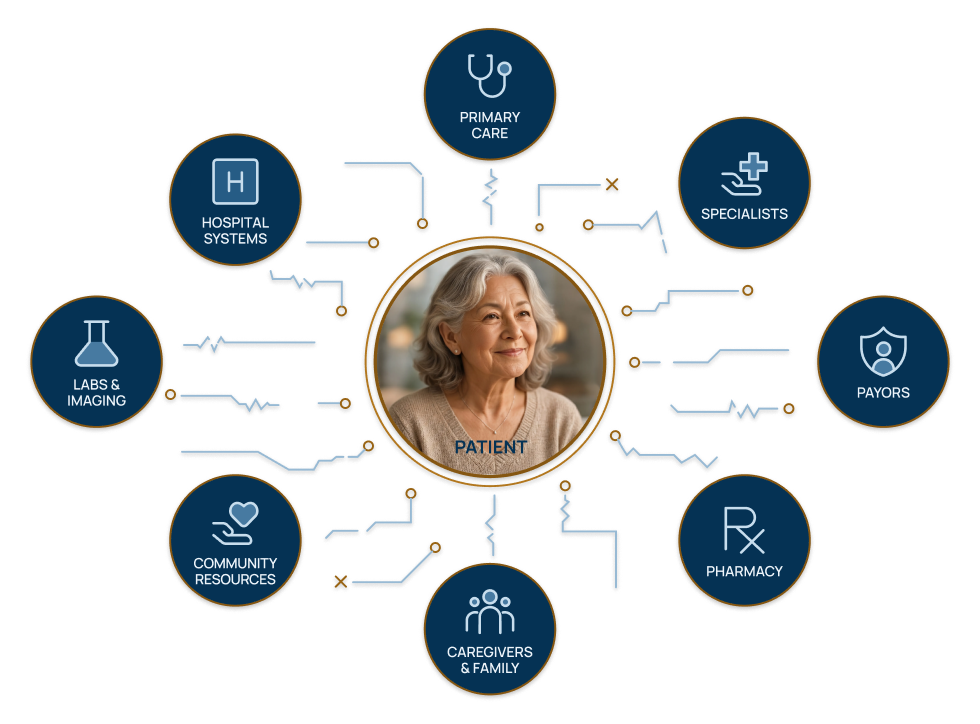
Hygia helps create continuity around the individual, connecting ongoing patient interaction with the organizations and people responsible for care.
The larger idea
Healthcare has built systems to document care, transact processes, analyze data, and facilitate workflow. It has not yet built a way to maintain a relationship with individuals over time.
Hygia is building that layer: Healthcare Relationship Infrastructure.
See how Hygia can help your organization extend its reach, understand what is happening between traditional points of care, and act when it matters.